ABOUT
ROBOTICS AUTOMATION
A centralized orchestration platform designed to transform isolated warehouse robots into a synchronized, intelligent fleet capable of dynamic task distribution and real-time coordination.
FLEET INTELLIGENCE
AUTONOMOUS OPS
Services
Digital Transformation
Category
Digital Partner
Client
Agile Delivery

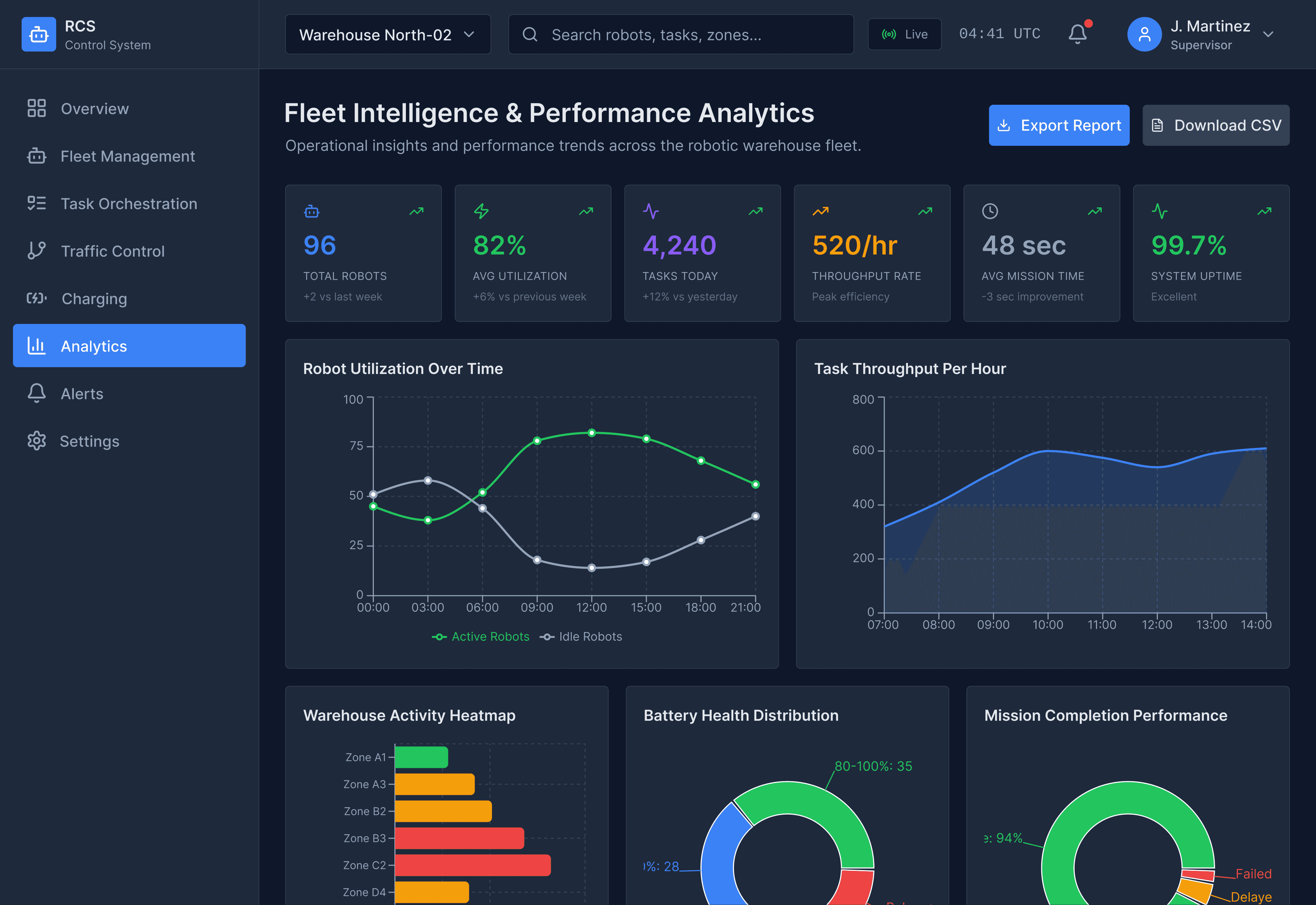
Problem: Advanced Robots Operating Without Coordination
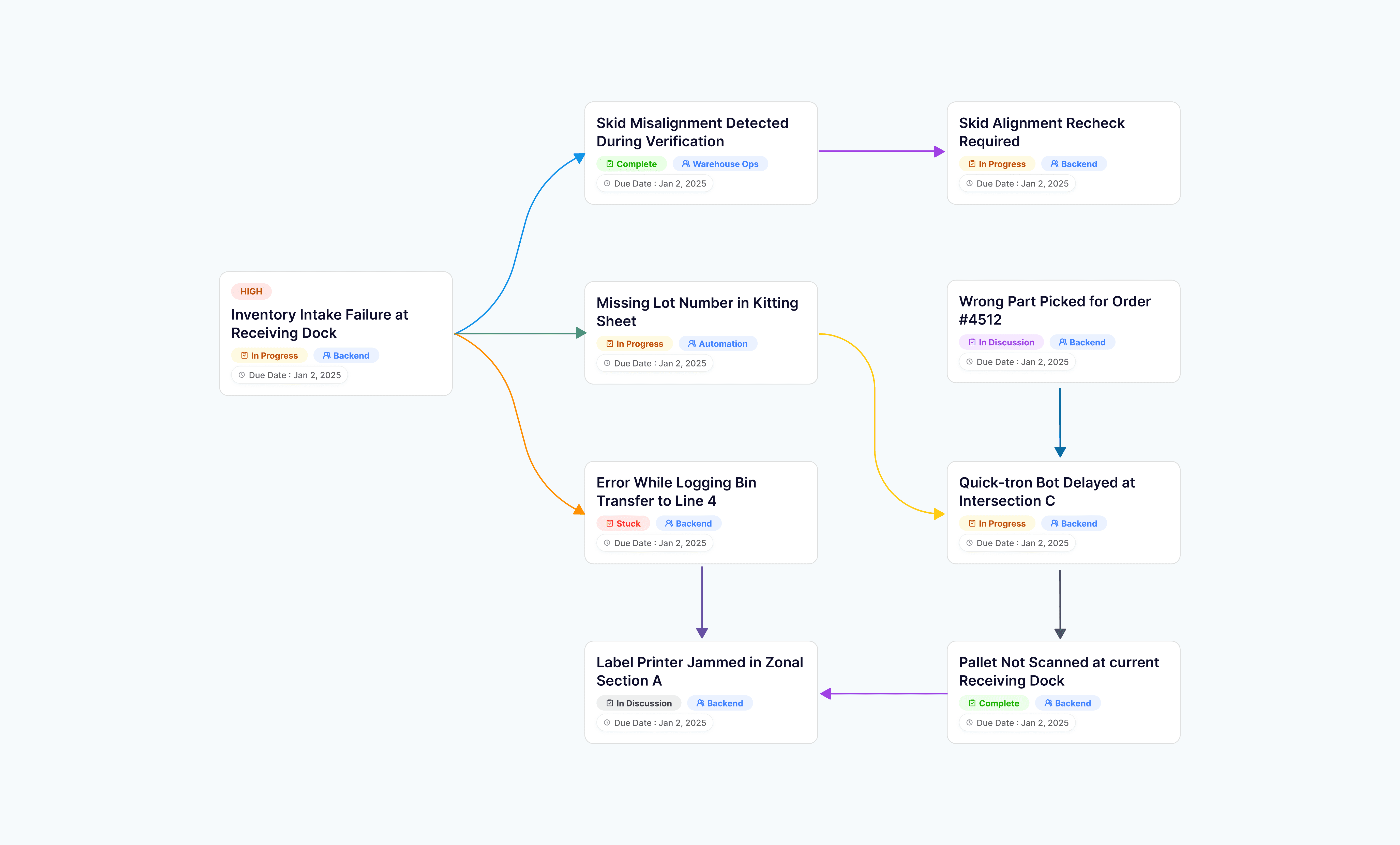
Warehouse robotics often operated independently, creating unnecessary wait times, traffic congestion, task duplication, and operational deadlocks. Without centralized orchestration, even advanced robotic units underperformed.
Challenge: Siloed Robotics Limiting Throughput
FLEET SILOS
Independent task execution without collective prioritization.
Congestion caused by uncoordinated navigation paths.
Uneven workload distribution across robotic units.
Increased dependency on manual intervention during peak cycles.
What Was Missing: Unified Fleet Orchestration
The infrastructure lacked dynamic task allocation, intelligent traffic routing, and predictive workload balancing required to coordinate robots as a single adaptive system.
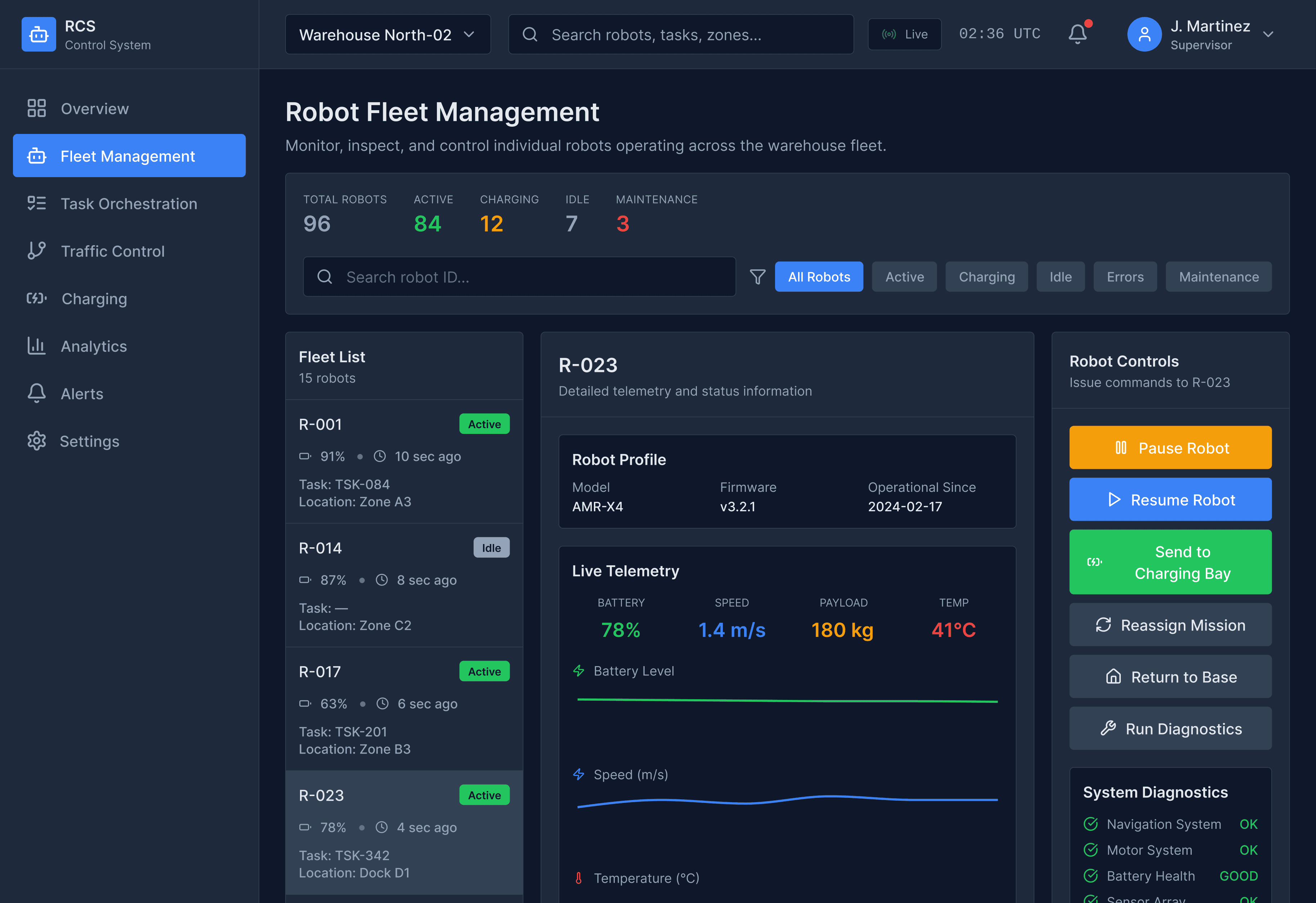
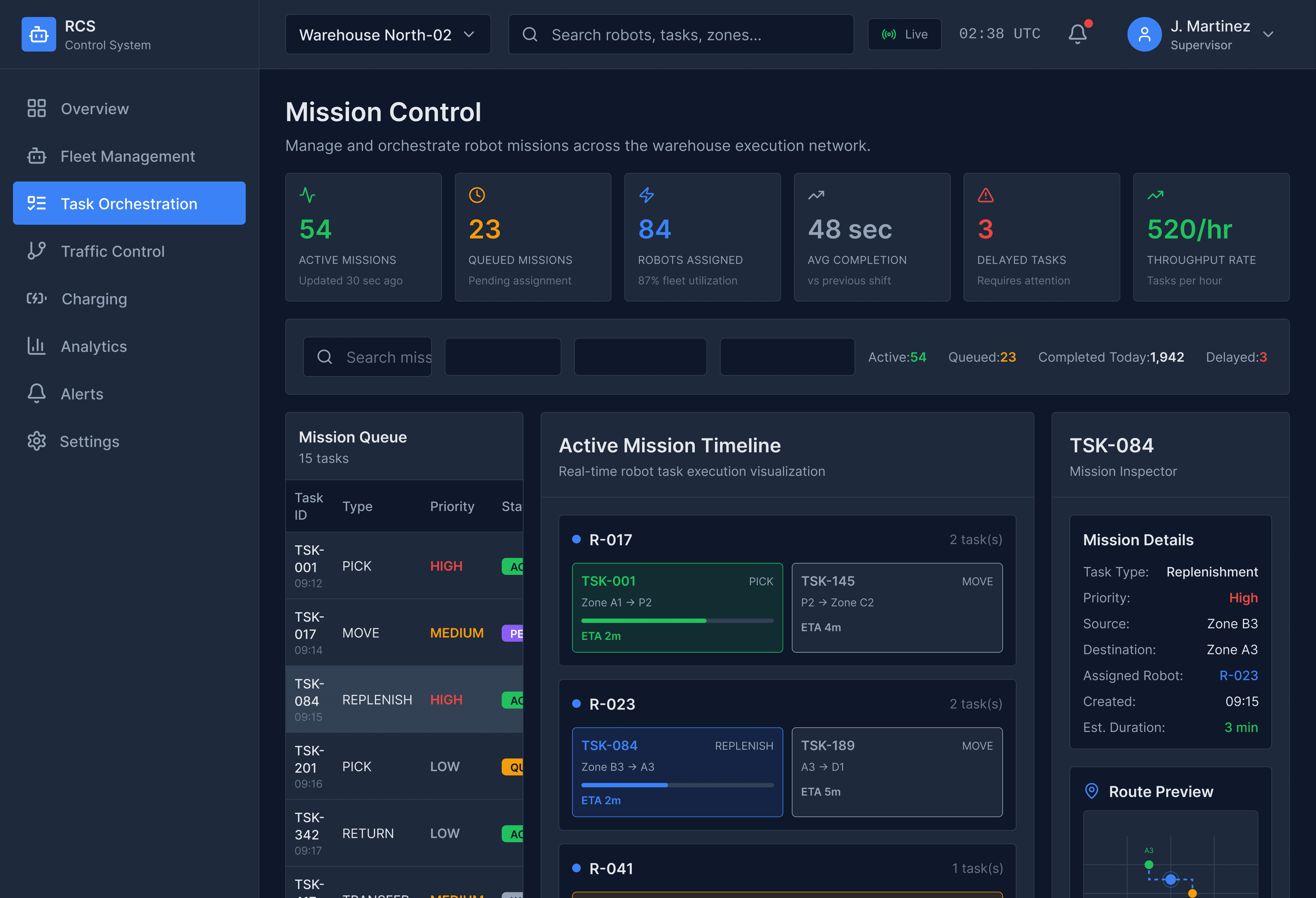
Solution: Real-Time Robotic Orchestration Engine
Implemented dynamic priority management for autonomous task distribution, intelligent traffic control to prevent congestion, and predictive workload balancing to ensure equitable effort allocation. The system unified robotic units into a synchronized, self-managing fleet.
Process: Structured 5-Step Delivery
OPERATIONAL SDLC
1. Discovery – Strategic Alignment & Requirement Definition: Analyzed robotic task flows, congestion patterns, and peak-load inefficiencies across warehouse operations.
2. Planning – Solution Architecture & Experience Design: Designed centralized orchestration layer with dynamic prioritization and traffic logic algorithms.
3. Execution – Scalable Engineering & Platform Development: Built real-time fleet coordination engine with predictive workload balancing and navigation optimization.
4. Testing – Quality Assurance & Risk Mitigation: Simulated peak demand cycles, validated routing efficiency, and stress-tested task allocation logic.
5. Delivery – Transition, Optimization & Continuous Value: Deployed orchestration platform in phases and refined balancing logic based on live operational data.
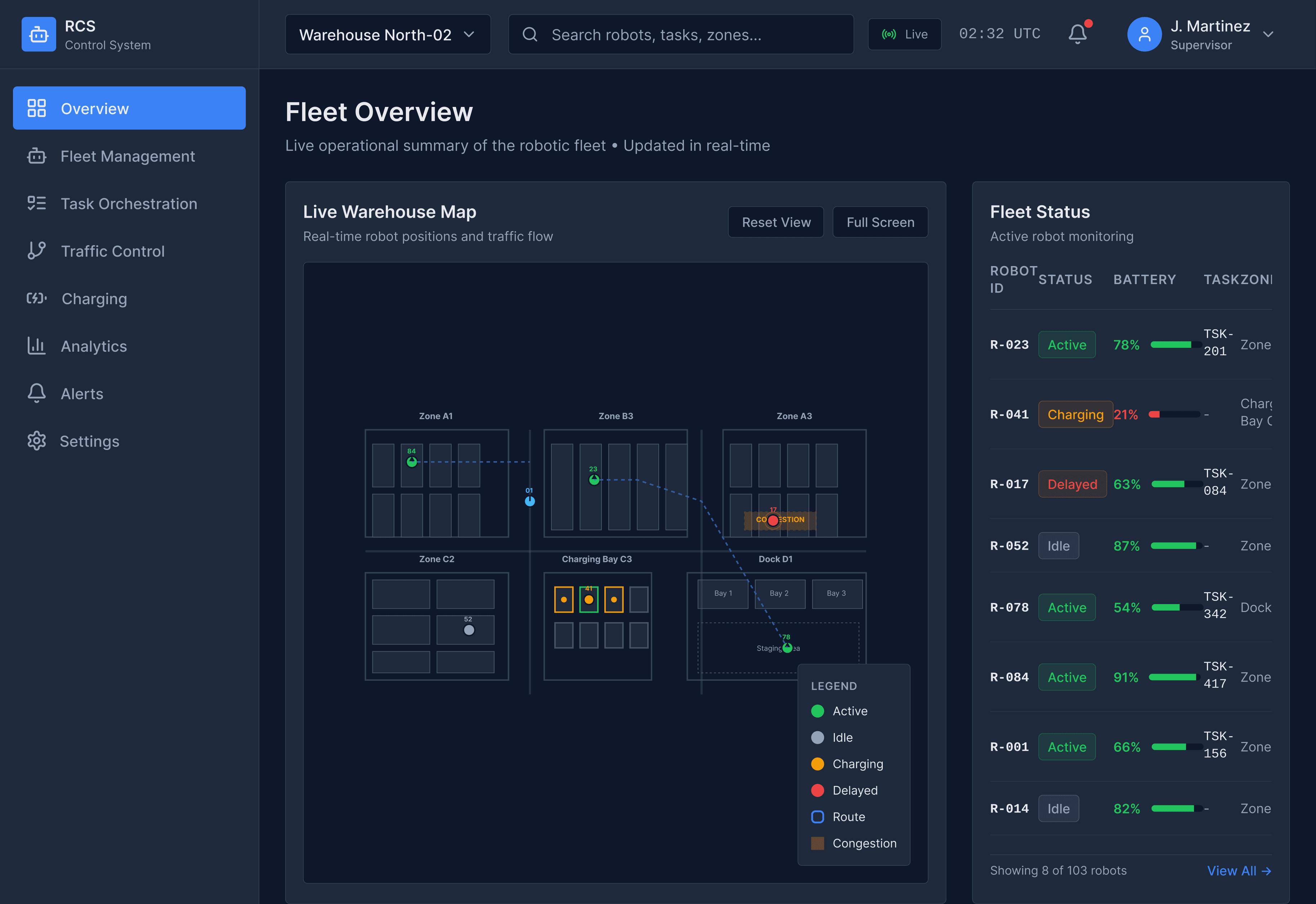
Conclusion: From Isolated Robots to Intelligent Fleet
The transformation unified robotic units into a coordinated ecosystem capable of adapting in real time. Through centralized intelligence and predictive balancing, automation scaled without adding infrastructure complexity.
Impact: Scalable Automation at Higher Throughput
THROUGHPUT
Increased operational throughput by 30%, reduced manual intervention, eliminated robotic deadlocks, and enabled scalable automation without additional infrastructure investment.
How We Work?